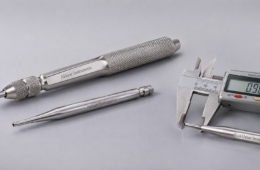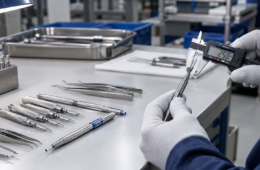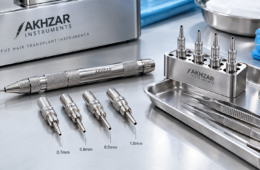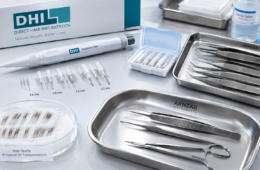
Sapphire blades for hair transplant are commonly used for creating recipient sites during hair restoration procedures. But choosing a blade should not be based only on the word “sapphire” or on blade size. The right selection depends on the surgeon’s technique, recipient-site design, blade geometry, required incision size, and overall instrument setup.
If you are purchasing sapphire blades for hair transplant procedures, the most important question is not simply “Is sapphire better than steel?”
The more useful question is:
Which blade specification fits the surgeon’s recipient-site technique, graft characteristics, and instrument setup?
This is a question we regularly encounter when discussing hair-transplant instruments with clinics, distributors, and professional buyers.
Sapphire blades have become widely associated with modern hair transplantation, particularly recipient-site creation. At the same time, there is considerable confusion online about whether sapphire itself produces better results, whether it allows higher density, which size should be selected, and how it compares with conventional steel blades.
The answer is more practical than many marketing claims suggest.
A sapphire blade is an instrument. The outcome of a hair-transplant procedure depends on many factors, including surgical planning, recipient-site design, graft handling, implantation technique, and the experience of the surgical team.
In this guide, Akhzar Instruments explain what buyers should actually look at when selecting sapphire hair transplant blades.
Quick Answer: What Are Sapphire Blades Used For?
Sapphire blades are specialized blades used primarily for creating recipient sites during hair-transplant procedures.
They are not the same thing as FUE.
FUE refers to the method used to extract follicular units from the donor area, while a blade can be used during the recipient-site creation stage.
The ISHRS notes that terms such as “Sapphire FUE” have become common marketing terms, but they are not recognized as separate FUE methods by the organization.
So when a buyer asks for “Sapphire FUE instruments,” it is useful to clarify exactly which instrument is required:
- Sapphire blades
- Blade holders
- FUE punches
- Implanter pens
- Forceps
- Other graft-handling instruments
That distinction can prevent ordering the wrong product.
Why Are Sapphire Blades Used in Hair Transplantation?
During a hair transplant, recipient sites need to be created before grafts are placed when the chosen technique uses pre-made sites.
The blade helps create these sites according to the planned:
- direction
- angle
- spacing
- size
- orientation
Blade geometry can therefore matter.
A PubMed-indexed study evaluated different recipient-site micro-blade shapes and insertion angles and found that calculated wound surface area varied according to blade shape and angle. The study specifically examined sapphire and other blade geometries.
This is one reason we recommend that professional buyers discuss blade geometry and application, rather than purchasing only on the basis of the word “sapphire.”
Sapphire vs Steel: What Is the Real Difference?
This is probably one of the most searched and debated questions around sapphire blades for hair transplant.
Online discussions frequently ask whether sapphire provides a genuine clinical advantage or whether it is primarily a marketing term.
The practical answer is:
Sapphire and steel are different blade materials, but material alone does not determine the result of a hair transplant.
A surgeon may choose sapphire because of its material properties, edge characteristics, available designs, or personal preference. Another surgeon may prefer steel because of the specific dimensions, geometry, or workflow available to them.
The important point is not to assume that changing blade material automatically changes the entire surgical outcome.
A simple comparison
| Consideration | Sapphire Blade | Steel Blade |
|---|---|---|
| Material | Sapphire | Surgical steel |
| Recipient-site use | Common | Common |
| Available designs | Manufacturer dependent | Broad range |
| Size options | Manufacturer dependent | Broad range |
| Selection | Technique + specification | Technique + specification |
| Does material alone guarantee results? | No | No |
For clinics, the better purchasing question is therefore:
“Which blade specification does our surgeon actually use?”
rather than:
“Which material is automatically better?”
Does Sapphire Give Better Hair Growth?
A blade should not be marketed as a guarantee of better hair growth.
Hair transplantation involves multiple stages, and graft survival depends on factors beyond the recipient-site blade.
The recipient site itself can influence transplanted hair characteristics and survival, as demonstrated in published research.
At the same time, the surgical instrument is only one component of the procedure.
There is also current literature comparing Sapphire and steel approaches, but individual studies should be interpreted in context rather than turned into universal guarantees. For example, a recent observational study reported differences between groups using Sapphire and steel blades, but observational comparisons do not establish that material alone causes every difference in outcome.
For this reason, at Akhzar Instruments we recommend focusing on specification, consistency, application, and compatibility rather than promising a particular clinical outcome from the blade material alone.
What Sapphire Blade Size Should You Choose?
There is no single size that is correct for every patient or every surgical technique. sapphire blades for hair transplant
Blade size should be selected according to the surgeon’s established recipient-site design and the grafts being implanted.
Before ordering, a clinic should clarify:
- Required blade width or diameter
- Blade shape
- Blade angle
- Recipient-site orientation
- Blade-holder compatibility
- Intended graft characteristics
- Surgeon preference
Why Does Blade Size Matter?
The size of the recipient site needs to correspond with the graft and the planned implantation technique sapphire blades for hair transplant.
An unnecessarily small site may make graft insertion difficult, while an unnecessarily large site may not match the intended surgical design.
The goal should not simply be:
“Use the smallest blade possible.”
The better goal is:
“Use the appropriate blade specification for the intended graft and recipient-site design.”
This is particularly important when a clinic is ordering blades in multiple sizes.
Does Blade Shape Matter?
Yes, blade geometry can affect the shape of the recipient site.
Research examining different micro-blade shapes and insertion angles found measurable differences in calculated wound surface area.
For a buyer, this means that “sapphire blade” is not a complete specification.
A useful purchase request might instead look like:
Sapphire blade + required size + shape + compatible holder + required quantity.
That gives the manufacturer much more useful information.
Research has also examined how recipient-site blade shape and insertion angle can affect the resulting wound surface area. This is one reason blade geometry should be considered alongside blade material and size when selecting recipient-site instruments. PubMed research on recipient-site micro-blades
What Is the Difference Between Sapphire Blade and DHI?
This is another common source of confusion about sapphire blades for hair transplant.
Sapphire blade and DHI are not two types of blades.
A sapphire blade is an instrument used for recipient-site creation.
DHI is commonly used to describe an implantation approach involving an implanter.
The ISHRS explains that forceps and implanters are two implantation approaches and also notes that DHI is not itself a separate hair-transplant method.
So a clinic can use:
- FUE extraction
- Sapphire blade for recipient-site creation
- Forceps for graft placement
or a different combination depending on its surgical workflow.
Can Sapphire Blades Be Used With FUE?
Yes.
The important distinction is that FUE describes graft extraction, while the sapphire blade may be used during recipient-site creation.
A simplified workflow can look like:
FUE punch → graft preparation → recipient-site creation → graft implantation
The instruments used in each stage are different.
For this reason, a clinic ordering a complete FUE setup should not ask only for “Sapphire FUE tools.” It should specify the actual instruments required.
It is also useful to understand the terminology around Sapphire FUE. The International Society of Hair Restoration Surgery (ISHRS) explains that “Sapphire FUE” refers to the use of sapphire blades rather than a separate FUE harvesting method. ISHRS surgical hair restoration guidance.
Does Sapphire Allow Higher Density?
This is another claim that deserves careful explanation.
A smaller recipient-site footprint can potentially influence how sites are positioned, but density is not determined by blade material alone.
Hairline design, graft availability, recipient area, graft characteristics, spacing, angle, and surgical technique all matter.
Online discussions frequently connect Sapphire with “higher density,” but these claims are debated and should not be treated as a universal rule.
For a manufacturer, it is more responsible to describe the instrument’s specifications than to promise a particular density outcome.
Recipient-site creation is an important part of hair transplantation, and published research has examined how the recipient site can influence hair-growth characteristics. PubMed research on recipient sites
How Should a Clinic Choose Sapphire Blades?
We recommend using this checklist before ordering.
1. Confirm the Application
Are the blades for:
- recipient-site creation?
- a particular hairline technique?
- crown work?
- general recipient-site use?
2. Confirm the Size
Ask the surgeon for the exact required dimensions.
3. Confirm the Shape
Do not assume that every sapphire blade has the same geometry.
4. Confirm the Holder
The blade should match the holder or system used by the clinic.
5. Ask for Samples
If you are trying a new supplier, samples can help your team assess the actual product before a larger order.
6. Check Batch Consistency
For distributors and clinics buying repeatedly, consistency between batches is important.
7. Clarify Packaging
International buyers should specify:
- individual packaging
- bulk packaging
- labelling
- branding
- quantity
8. Discuss OEM Requirements
If you are a distributor or medical-instrument brand, ask whether OEM/private-label production is available.
What Should You Ask a Sapphire Blade Manufacturer?
Before sending a purchase order like Akhzar Instruments, ask these questions about sapphire blades (Instruments) for hair transplant:
- What blade sizes are available?
- What blade shapes are available?
- Which holders are compatible?
- Are samples available?
- What is the MOQ?
- What packaging options are available?
- Can the blades be privately labeled?
- Can custom specifications be produced?
- What is the expected production lead time?
- Can the same specification be supplied for repeat orders?
A clear specification sheet can save considerable time between the buyer and manufacturer.
How to Check a Sapphire Blade Sample
If you are evaluating a new supplier about sapphire blades for hair transplant, do not judge the sample only from photographs.
Check:
Blade geometry
Does the actual shape match the ordered specification?
Edge condition
Is the cutting edge consistent and appropriate for the intended application?
Holder fit
Does it fit the intended holder correctly?
Surface and finish
Look for visible manufacturing defects or irregularities.
Packaging
Is the product protected and clearly identified?
Batch consistency
If multiple samples are available, compare them rather than evaluating only one piece.
For professional buyers, these checks are more useful than relying on a supplier’s marketing description.
Common Buying Mistakes
Mistake 1: Ordering by Material Only
“Sapphire blade” is not a complete specification.
Mistake 2: Choosing the Smallest Size
Smaller does not automatically mean more appropriate.
Mistake 3: Ignoring Holder Compatibility
A technically suitable blade is still impractical if it does not fit the intended holder.
Mistake 4: Buying a Large Quantity Without Testing
A sample or small evaluation order can reduce risk when changing suppliers.
Mistake 5: Believing Guaranteed Clinical Claims
No instrument manufacturer should promise that a blade alone guarantees graft survival, density, or healing.
Why Manufacturing Consistency Matters
When a clinic purchases one sample, almost any acceptable product may appear satisfactory.
The bigger test comes with repeat orders.
If a clinic orders the same specification several times, it expects the product to remain consistent.
For this reason, professional buyers should consider sapphire blades for hair transplant:
- dimensional consistency
- tip/edge consistency
- material quality
- packaging
- quality control
- repeat production capability
This is particularly important for distributors supplying products under their own brand.
OEM and Private Label Sapphire Blades
Distributors and medical-instrument companies may need their own:
- logo
- product name
- packaging
- labels
- specifications
- product codes
OEM/private-label requirements should be discussed before production so that specifications and packaging are agreed in advance.
How Akhzar Instruments Can Help
At Akhzar Instruments, we manufacture and export hair-transplant instruments from Sialkot, Pakistan.
Our hair-transplant range includes:
- Sapphire & hair-transplant blades
- FUE punches
- Implanter pens
- Implant forceps
- Graft-handling instruments
- Related accessories
We work with professional buyers who may have a specific product requirement rather than needing a fixed catalogue package.
If you are a clinic, distributor, or medical-instrument buyer, you can share your required product list or blade specification or know about sapphire blades for hair transplant contact with us so we can review the requirement and prepare a quotation.
Frequently Asked Questions
1. What are sapphire blades for hair transplant?
Sapphire blades are specialized blades commonly used to create recipient sites during hair-transplant procedures. Their size, shape, and geometry vary according to the manufacturer and surgical technique.
2. Are sapphire blades better than steel blades?
There is no universal answer that applies to every procedure. Sapphire and steel are different materials, but surgical results depend on many factors beyond blade material.
3. What size sapphire blade should I use?
The appropriate size depends on the surgeon’s recipient-site technique, graft characteristics, and instrument setup. The size should be specified by the clinical team rather than selected solely because it is smaller.
4. What is Sapphire FUE?
“Sapphire FUE” is commonly used as a marketing term for FUE procedures in which sapphire blades are used for recipient-site creation. The ISHRS does not recognize Sapphire FUE as a separate FUE method.
5. Is a sapphire blade used for graft extraction?
Normally, the extraction stage of FUE uses a punch. A blade is generally associated with recipient-site creation rather than follicular-unit extraction.
6. Does sapphire reduce graft damage?
The answer cannot be attributed to the material alone. Graft handling, recipient-site design, surgical technique, and operator experience all matter.
7. Can sapphire blades create higher density?
Blade size and geometry can influence recipient-site design, but density is not determined by sapphire material alone.
8. What is the difference between sapphire blades and DHI?
A sapphire blade is an instrument used for recipient-site creation. DHI is generally used to describe an implantation approach involving an implanter. They are not equivalent terms.
9. Can I buy sapphire blades wholesale?
Yes. Professional manufacturers and exporters can supply sapphire blades for clinics, distributors, and medical-instrument businesses according to required specifications and quantities.
10. Can sapphire blades be OEM or private label?
Depending on the manufacturer’s production capabilities, OEM/private-label options may include branding, packaging, labeling, and agreed product specifications.
11. Should I order samples before a bulk purchase?
For a new supplier, evaluating samples before a large order can help confirm the blade specification, fit, finish, packaging, and consistency.
12. What information should I send to a sapphire blade supplier?
Send the required blade size, shape, holder compatibility, quantity, packaging preference, branding requirements, and any reference product or specification you already use.
Final Takeaway
The best way to choose sapphire blades for hair transplant procedures is to start with the surgical requirement rather than the material name.
Confirm the required size, shape, geometry, holder compatibility, packaging, and quantity. If you are changing suppliers, evaluate samples before committing to a large order.
Sapphire can be an appropriate option for many professional hair-transplant instrument setups, but the blade itself should not be presented as a guarantee of a particular clinical outcome.
For clinics, distributors, and OEM buyers, clear specifications and consistent manufacturing are more useful than broad marketing claims.
If you already have a blade specification, reference sample, or product list, share it with Akhzar Instruments for a custom quotation.