FUE Punch Durability: Why Does Your FUE Punch Lose Cutting Performance?
An FUE punch may perform well when it is new but gradually lose its cutting performance after repeated use. The punch may start dragging, require more pressure, or feel less effective during extraction.
This is where FUE punch durability becomes an important consideration for clinics and hair restoration professionals.
When an FUE punch starts losing performance, the problem is not always the quality of the instrument itself. Punch design, material, edge geometry, handling, cleaning, sterilization, storage, and the way the punch is used can all affect its useful working life.
Understanding these factors can help clinics identify why an FUE punch is losing performance and when it may need inspection or replacement.
What Does FUE Punch Durability Mean?
FUE punch durability refers to the ability of an FUE punch to maintain its intended performance during its useful service life.
A durable punch should maintain its functional characteristics when it is used, cleaned, sterilized, handled, and stored according to the manufacturer’s instructions.
However, durability does not mean that an FUE punch remains sharp indefinitely.
Every cutting instrument has a useful working life, and its performance can change with repeated use.
For professional educational information about hair restoration surgery, the International Society of Hair Restoration Surgery (ISHRS) provides resources for hair restoration professionals and patients.
1. The Cutting Edge Gradually Becomes Less Effective
Repeated use can gradually affect the cutting edge of an FUE punch.
As the edge changes, the operator may notice:
- More resistance during extraction
- Increased pressure requirements
- Tissue dragging
- Less consistent penetration
- Changes in extraction performance
These changes can be important indicators when evaluating FUE punch durability.
If a punch that previously performed smoothly suddenly requires considerably more force, it should be inspected instead of simply applying additional pressure.
2. Punch Material Can Affect Durability
The material used to manufacture an FUE punch can influence how well it maintains its intended cutting characteristics.
However, material alone does not determine FUE punch durability.
Other factors can include:
- Material hardness
- Edge geometry
- Manufacturing quality
- Surface finishing
- Punch design
- Intended application
Two punches with similar dimensions may perform differently because their manufacturing processes and materials are different.
This is why buyers should consider the complete instrument rather than judging durability only by the punch diameter.
3. Punch Diameter Can Affect Performance
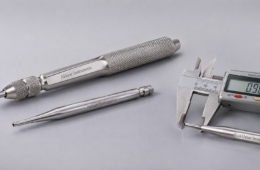
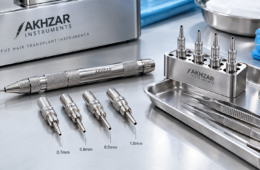
FUE punches are available in different diameters, including commonly used sizes such as:
- 0.7 mm
- 0.8 mm
- 0.9 mm
- 1.0 mm
The appropriate diameter depends on the clinical situation, graft characteristics, extraction approach, and surgeon preference.
A punch that is not appropriate for the intended application may appear to have poor performance even when the instrument itself is functioning normally.
Choosing the appropriate size is therefore an important part of maintaining consistent performance.
4. Excessive Force Can Create Additional Problems
If an FUE punch starts requiring more pressure, simply pushing harder is not necessarily the solution.
Excessive force can reduce control and may increase the risk of unwanted tissue or graft trauma.
When resistance increases, the operator should consider checking:
- Punch sharpness
- Punch diameter
- Alignment
- Technique
- Tissue characteristics
- Instrument condition
This approach is more useful than assuming that increased force will restore normal performance.
5. Cleaning and Sterilization Can Affect FUE Punch Durability
Reusable surgical instruments require appropriate cleaning and sterilization.
Improper processing can potentially contribute to surface damage, corrosion, or deterioration depending on the instrument’s material and manufacturing process.
For this reason, proper processing is an important consideration for FUE punch durability.
Clinics should always follow the manufacturer’s validated instructions for cleaning, sterilization, and maintenance.
Different FUE punches may have different processing requirements, so one general procedure should not automatically be applied to every instrument.
6. Storage Can Affect the Working Life of an FUE Punch
An FUE punch can be damaged even when it is not being used.
Improper storage may expose the cutting edge to:
- Contact with other metal instruments
- Impact
- Moisture
- Contamination
- Improper packaging
Repeated contact between the cutting edge and other instruments can potentially affect its condition.
Protecting the punch during storage is therefore another simple step that can support better FUE punch durability.
7. Manual Technique Can Influence Punch Life
The working life of an FUE punch is also influenced by how the instrument is used.
Factors may include:
- Rotation technique
- Applied pressure
- Alignment
- Extraction depth
- Tissue characteristics
- Operator experience
These factors can influence the mechanical load placed on the punch.
If one operator experiences faster deterioration than another while using the same type of punch, technique and handling should also be evaluated.
8. Sharp and Serrated Punches Have Different Characteristics
FUE punches can have different edge designs, including sharp and serrated configurations.
A sharp punch may provide a particular penetration feel, while a serrated design may interact differently with tissue and hair characteristics.
Neither design should automatically be considered superior in every situation.
The appropriate choice depends on the intended application, extraction technique, graft characteristics, and operator preference.
When evaluating FUE punch durability, it is therefore useful to consider the specific punch design rather than comparing only the names “sharp” and “serrated.”
How to Tell When an FUE Punch Needs Replacement
A punch should be inspected when you notice a noticeable change in its normal performance.
Possible warning signs include:
- Increasing resistance
- Reduced cutting performance
- Visible edge damage
- Irregular extraction behavior
- Difficulty maintaining consistent penetration
- Damage caused during cleaning or handling
- Unusual changes compared with a new punch
Monitoring these signs can help clinics make better decisions about FUE punch durability and replacement.
If an instrument no longer performs as intended, continuing to use it simply to extend its service life may not be worthwhile.
How to Improve FUE Punch Durability
Several practical habits can help protect an FUE punch during its useful working life.
1. Choose the Appropriate Punch
Select the diameter and design according to the intended procedure and clinical requirements.
2. Avoid Unnecessary Force
Do not compensate for reduced cutting performance simply by increasing pressure.
3. Protect the Cutting Edge
Avoid unnecessary contact between the punch tip and hard surfaces or other metal instruments.
4. Follow Cleaning Instructions
Use the cleaning and sterilization procedures recommended for the specific instrument.
5. Store the Instrument Correctly
Protect the punch from impact, moisture, contamination, and unnecessary contact.
6. Inspect the Punch Regularly
Routine inspection can help identify deterioration before the instrument’s performance becomes unacceptable.
These basic practices can contribute to better FUE punch durability and more consistent instrument performance.
How Akhzar Instruments Can Help
At Akhzar Instruments, we manufacture and supply hair transplant instruments for clinics, distributors, and professional buyers.
Our FUE punch range can include different diameters and configurations according to buyer requirements, including sharp and serrated options.
For buyers comparing FUE punch durability, it is important to consider the punch’s design, material, size, intended application, and handling requirements rather than focusing on only one specification.
Akhzar Instruments can also discuss bulk orders, OEM/private-label requirements, and customized instrument specifications.
You can explore our hair transplant instruments or contact Akhzar Instruments with your required specification and quantity.
You can also visit the Akhzar Instruments homepage to learn more about our product range and services.
Frequently Asked Questions
How long does an FUE punch last?
There is no universal number of uses for every FUE punch. Service life depends on the punch design, material, usage, handling, cleaning, sterilization, and storage conditions.
Why does an FUE punch become less sharp?
Repeated use, contact damage, improper processing, and mechanical stress can contribute to reduced cutting performance.
Does punch diameter affect durability?
Diameter is only one factor. Different sizes and designs can experience different mechanical loads depending on how they are used.
Are serrated FUE punches more durable than sharp punches?
Not necessarily. FUE punch durability depends on the specific design, material, manufacturing quality, handling, and intended application.
Why does my FUE punch require more pressure than before?
Possible causes include reduced edge performance, incorrect punch selection, alignment, tissue characteristics, or changes in technique.
Can sterilization damage an FUE punch?
Improper cleaning or sterilization can potentially affect an instrument. The manufacturer’s instructions for the specific punch should always be followed.
How should FUE punches be stored?
FUE punches should be stored in a way that protects the cutting edge from impact, moisture, contamination, and unnecessary contact with other instruments.
What FUE punch sizes are available?
Common FUE punch sizes include 0.7 mm, 0.8 mm, 0.9 mm, and 1.0 mm, although the appropriate size depends on the specific clinical requirement.
Does Akhzar Instruments supply different FUE punch sizes?
Yes. Akhzar Instruments can discuss different punch diameters and configurations according to the buyer’s requirements.
Does Akhzar Instruments offer sharp and serrated FUE punches?
Yes. Sharp and serrated punch requirements can be discussed depending on the required specification and application.
Can I order FUE punches in bulk?
Yes. Akhzar Instruments can discuss bulk supply requirements with clinics, distributors, and professional buyers.
Does Akhzar Instruments offer OEM or private-label FUE punches?
OEM and private-label requirements can be discussed for suitable bulk orders.
Final Thoughts
FUE punch durability is not determined by one factor.
Punch material, edge design, diameter, handling, technique, cleaning, sterilization, and storage can all influence how long an instrument maintains its intended performance.
When an FUE punch begins losing cutting performance, the best approach is to identify the underlying cause instead of simply increasing pressure.
For clinics, distributors, and professional buyers looking for FUE punches in different sizes and configurations, Akhzar Instruments can discuss bulk, OEM, private-label, and customized requirements.