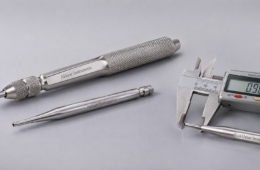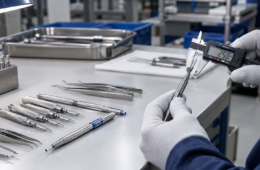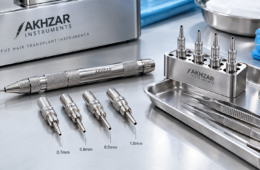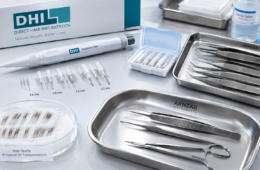
Sapphire blades are widely used in hair transplant procedures where clean, controlled recipient-site incisions are important. However, even a high-quality sapphire blade may not perform as expected if the blade size, handling technique, holder, or surgical conditions are not appropriate.
If a sapphire blade is dragging, creating uneven incisions, requiring excessive pressure, or producing inconsistent recipient sites, replacing the blade immediately is not always the complete solution. The underlying cause needs to be identified first.
This guide explains the most common reasons why sapphire blades may not cut cleanly and what clinicians should check before using another blade.
What Makes Sapphire Blades Different?
Sapphire blades are commonly selected for their hardness, sharpness, and ability to create controlled recipient-site incisions. In hair transplantation, the blade must work with the surgeon’s technique, recipient-area characteristics, graft size, and desired implantation pattern.
The blade itself is only one part of the system.
A suitable blade should work together with the appropriate blade holder, incision technique, angle, depth, and recipient-site planning.
For general background on hair restoration procedures, the International Society of Hair Restoration Surgery (ISHRS) provides educational resources for patients and professionals.
1. The Blade Is Not Actually Sharp Enough
One of the most obvious causes of poor cutting performance is inadequate sharpness.
A blade that does not enter the tissue smoothly may cause:
- Increased resistance
- Tissue dragging
- Uneven incision edges
- The need for excessive pressure
- Inconsistent recipient sites
A surgeon may initially assume that technique is the problem when the real issue is the cutting edge.
What to check
Before use, inspect the blade carefully. If the cutting edge appears damaged, irregular, contaminated, or otherwise unsuitable, it should not be used.
Never try to compensate for a poor cutting edge by applying excessive force.
2. The Wrong Blade Size Is Being Used
Blade size should correspond to the requirements of the procedure.
Using a blade that is too small or too large can affect incision formation and graft placement.
For example, if the incision is not appropriate for the graft dimensions, implantation may become more difficult and unnecessary tissue manipulation may occur.
The correct size should therefore be selected according to the graft characteristics, implantation plan, and clinician’s established protocol.
3. Excessive Pressure Can Affect Incision Quality
A sharp blade should not require excessive downward force.
When a surgeon feels that considerably more pressure is needed to create an incision, several factors should be considered:
- Blade sharpness
- Blade condition
- Holder alignment
- Tissue characteristics
- Incision angle
- Blade size
Increasing force without identifying the underlying issue can make the procedure less controlled.
4. The Blade Holder May Be Affecting Performance
Sometimes the blade is not the real problem.
A poorly fitting or improperly aligned blade holder can affect stability during incision creation. Even a sharp blade may perform poorly if it moves, shifts, or is not seated correctly.
Before blaming the blade, inspect the complete setup.
A stable blade-holder combination can help the surgeon maintain consistent control during recipient-site creation.
You can also explore Akhzar Instruments’ surgical and hair transplant instruments to see the types of instruments available for hair restoration procedures.
5. Reusing a Blade Can Reduce Consistency
A blade intended for single use should not be treated as a reusable instrument.
Repeated use can affect the cutting edge and may introduce contamination or handling risks.
If the blade is designed for single use, follow the manufacturer’s instructions and applicable clinical protocols.
6. The Blade May Be Damaged During Handling
Sapphire blades are delicate cutting instruments. Contact with hard surfaces, inappropriate storage, or careless handling can damage the cutting edge.
A blade can look visually acceptable while still having a compromised edge.
This is why blades should be handled carefully and inspected before use.
7. The Incision Technique May Be the Real Issue
Not every cutting problem is caused by the instrument.
Recipient-site creation depends heavily on:
- Incision angle
- Direction
- Depth
- Tissue characteristics
- Graft orientation
- Surgeon experience
If the same blade performs well in one situation but poorly in another, the clinical technique and tissue conditions should also be evaluated.
The International Society of Hair Restoration Surgery is a useful professional resource for further education about hair restoration.
How to Troubleshoot a Sapphire Blade That Is Not Cutting Cleanly
Instead of immediately changing everything, check the system step by step.
Step 1: Inspect the blade
Check for visible damage, contamination, or an irregular cutting edge.
Step 2: Confirm the blade size
Make sure the selected blade corresponds with the planned recipient-site requirements.
Step 3: Check the holder
Confirm that the blade is correctly seated and stable.
Step 4: Review the technique
Consider whether excessive pressure, an inappropriate angle, or inconsistent depth is contributing to the problem.
Step 5: Replace a questionable blade
If the blade appears damaged or unsuitable, replace it rather than trying to compensate through increased force.
How Akhzar Instruments Can Help
At Akhzar Instruments, we focus on supplying hair transplant instruments according to the practical requirements of clinics and hair restoration professionals.
Our range includes sapphire blades and other instruments used for FUE and hair transplantation procedures.
If you are looking for a specific blade size, bulk supply, OEM/private-label production, or a customized instrument requirement, you can contact Akhzar Instruments for a quotation.
You can also visit the Akhzar Instruments homepage to learn more about our hair transplant instrument range.
Frequently Asked Questions
Are sapphire blades always sharper than steel blades?
Sapphire blades are valued for their hardness and cutting characteristics, but actual performance depends on manufacturing quality, blade condition, handling, and clinical use.
Why does my sapphire blade drag instead of cutting smoothly?
Possible causes include an unsuitable blade, damaged cutting edge, incorrect size, holder instability, excessive pressure, or technique-related factors.
Can a damaged sapphire blade be reused?
A blade that is damaged or unsuitable should not be reused. Follow the manufacturer’s instructions and your clinical protocols.
Does blade size matter in hair transplantation?
Yes. Blade selection should be appropriate for the planned recipient-site dimensions and graft characteristics.
Can the blade holder affect cutting performance?
Yes. An unstable or poorly fitting holder can reduce control and consistency during incision creation.
How should sapphire blades be stored?
Follow the manufacturer’s storage and handling instructions. Protect the cutting edge from contact with hard surfaces and contamination.
Are sapphire blades suitable for all hair transplant procedures?
Blade selection depends on the procedure, surgeon preference, graft characteristics, and recipient-site requirements.
Where can I buy hair transplant sapphire blades?
Akhzar Instruments supplies hair transplant instruments, including sapphire blades, for clinics, distributors, and professional buyers.
Does Akhzar Instruments offer bulk orders?
Yes. Buyers can contact Akhzar Instruments regarding bulk requirements, OEM/private-label production, and customized instrument needs.
Can I request a specific sapphire blade specification?
You can contact Akhzar Instruments with your required specification so the available options can be discussed.
Final Thoughts
When a sapphire blade is not cutting cleanly, replacing the blade may solve the problem—but it is important to identify why the problem occurred in the first place.
Blade condition, size, holder stability, handling, tissue characteristics, and surgical technique can all influence incision quality.
For clinics and distributors looking for dependable hair transplant instruments, Akhzar Instruments provides sapphire blades and other FUE-related instruments with options for bulk and customized requirements.