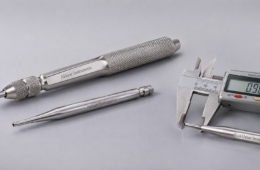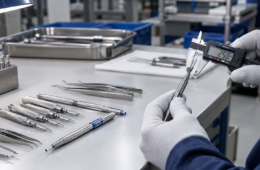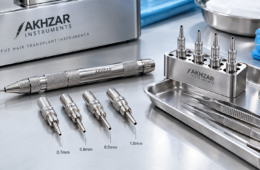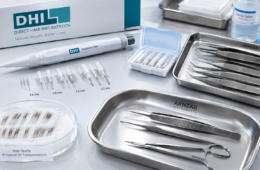
Hair transplant procedures require a range of specialized instruments, and hair transplant forceps are among the important tools used for graft handling.
Forceps may appear simple compared with other hair restoration instruments, but their tip design, alignment, grip and overall construction can influence how comfortably and precisely a professional can handle delicate follicular grafts.
At Akhzar Instruments, we believe that understanding surgical instruments is an important part of professional education. Our goal is to provide professional hair transplant instruments while helping clinics, practitioners, students and international buyers understand instrument selection.
What Are Hair Transplant Forceps?
Hair transplant forceps are precision instruments used to handle follicular grafts during hair restoration procedures.
Depending on the procedure and workflow, forceps may be used for:
- Handling extracted grafts
- Transferring grafts
- Organizing grafts
- Assisting graft placement
- Manipulating small follicular units
Published literature describing FUE procedures also discusses the use of fine forceps during graft removal and handling.
Why Are Forceps Important?
Follicular grafts are delicate biological structures.
During transplantation, grafts may be handled several times. Appropriate instrument selection and professional handling can therefore support controlled manipulation.
Important forceps characteristics include:
- Tip design
- Tip alignment
- Grip
- Jaw geometry
- Surface finish
- Size
- Weight
- Ergonomics
What Makes Good Hair Transplant Forceps?
There is no single characteristic that defines the ideal forceps.
Professionals should consider several features.
1. Tip Precision
The tips should meet consistently and allow controlled manipulation.
2. Tip Alignment
Misaligned tips can make delicate graft handling more difficult.
3. Appropriate Grip
The instrument should provide controlled handling without requiring unnecessary pressure.
4. Surface Finish
A consistent surface finish is an important characteristic of a professional surgical instrument.
5. Ergonomics
Size, weight and overall comfort matter during longer procedures.
Types of Hair Transplant Forceps
Different designs can be used for different applications.
Fine-Tip Forceps
Fine tips can support precise manipulation of small grafts.
Graft Handling Forceps
These are designed for controlled manipulation and transfer of follicular units.
Precision Forceps
Precision designs can be selected where controlled handling is particularly important.
The appropriate design depends on the procedure and practitioner preference.
Forceps and FUE Graft Handling
FUE involves harvesting individual follicular units from the donor area.
After extraction, the graft may need to be transferred and organized before implantation.
A simplified workflow can be:
Extraction → Graft Handling → Graft Preparation → Implantation
Forceps may be involved during graft-handling stages.
The exact workflow varies between clinics and practitioners.
ISHRS — Follicular Unit Extraction
Graft Integrity and Handling
A follicular graft may contain one or more hair follicles along with surrounding tissue.
Unnecessary mechanical pressure or inappropriate manipulation can potentially affect graft integrity.
This is why professional handling technique is as important as instrument selection.
Forceps should support controlled manipulation rather than encourage excessive pressure.
FUE graft extraction and handling
Forceps vs Implanter Pens
Forceps and implanter pens serve different purposes.
Forceps are generally used for controlled graft handling.
Implanter pens are specialized instruments used in certain implantation techniques.
They should not be considered interchangeable.
For other hair restoration instruments:
Akhzar Hair Transplant Instruments
How to Choose Hair Transplant Forceps
A professional buyer can use the following checklist.
Step 1 — Identify the application
Determine whether the forceps will be used primarily for graft handling, transfer or another task.
Step 2 — Evaluate the tip
Check tip shape, precision and alignment.
Step 3 — Consider grip
The forceps should provide controlled handling.
Step 4 — Evaluate ergonomics
Consider size, weight and comfort.
Step 5 — Check manufacturing consistency
Professional instruments should have consistent dimensions and finish.
Step 6 — Consider supplier requirements
Clinics and distributors may need specific quantities, packaging or OEM/private-label options.
Common Mistakes
Choosing only by price
Price does not necessarily indicate suitability.
Ignoring tip alignment
Tip alignment is important for precision handling.
Choosing the wrong tip design
Different applications may require different designs.
Ignoring ergonomics
Comfort matters during longer procedures.
Treating all forceps as identical
Different forceps can have significantly different designs and intended applications.
What Should International Buyers Look For?
International clinics and distributors may have additional requirements, including:
- Consistent product quality
- Product specifications
- Wholesale quantities
- OEM/private-label production
- Packaging
- Export support
- Reliable communication
- Long-term supply
For international B2B buyers, supplier reliability can be as important as the instrument itself.
Hair Transplant Forceps at Akhzar Instruments
Akhzar Instruments manufactures and supplies hair transplant instruments for professional and B2B applications.
Our product range includes forceps for hair restoration and graft-handling requirements.
Akhzar Hair Transplant Forceps
Our educational resources also cover:
- Hair transplant forceps
- FUE punches
- Sharp and serrated punches
- Sapphire blades
- Implanter instruments
- Graft handling
- Hair restoration instrument selection
For related education:
How FUE Punch Design Affects Graft Extraction
Frequently Asked Questions
What are hair transplant forceps used for?
Hair transplant forceps are precision instruments used for handling follicular grafts during different stages of hair restoration.
What are FUE forceps?
FUE forceps are precision forceps used in workflows involving follicular unit extraction and graft handling.
Why is forceps tip alignment important?
Proper alignment helps provide controlled and precise manipulation.
Can forceps damage a graft?
Improper or excessive handling can potentially affect graft integrity, which is why appropriate technique and instrument selection are important.
Are hair transplant forceps different from regular surgical forceps?
Hair transplant forceps can be designed with specific tip and handling characteristics for small follicular grafts.
What should clinics consider when buying forceps?
Clinics can evaluate tip design, alignment, grip, ergonomics, manufacturing consistency and intended application.
Can hair transplant forceps be customized?
Depending on the manufacturer, OEM and private-label specifications may be possible.
Does Akhzar Instruments supply international buyers?
Akhzar Instruments serves professional and B2B requirements and can discuss wholesale, OEM and international supply requirements.
Conclusion
Hair transplant forceps are precision instruments that can play an important role in graft handling.
When choosing forceps, professionals should consider:
Tip Design + Alignment + Grip + Ergonomics + Manufacturing Quality + Application
Price alone should not determine the selection.
A better understanding of forceps design can help clinics, practitioners and distributors make more informed decisions about hair restoration instruments.
Akhzar Instruments aims to support the global hair restoration community through professional instrument manufacturing, B2B supply and educational resources.