Follicular Unit Extraction (FUE) is widely used for hair restoration because it allows individual follicular units to be harvested without removing a linear strip of scalp. However, the quality of the extracted grafts is just as important as the extraction technique itself.
When FUE grafts are frequently damaged, crushed, cut, or separated during extraction, the problem may not come from a single factor. Punch selection, punch condition, instrument design, alignment, extraction technique, tissue characteristics, and graft handling can all affect graft integrity.
For clinics and hair transplant professionals, identifying the exact source of graft damage is important because changing the instrument or adjusting the extraction process can sometimes reduce avoidable damage.
This guide explains the common reasons FUE grafts may become damaged during extraction and how the right FUE punch and graft-handling instruments can help address these problems.
What Does FUE Graft Damage Mean?
FUE graft damage generally refers to physical damage to the follicular unit during harvesting or handling.
A graft may contain one or more hair follicles surrounded by supporting tissue. During extraction, excessive mechanical force, incorrect punch positioning, or unsuitable instrumentation can affect the integrity of the follicular unit.
Common signs of extraction-related damage include:
- Transected follicles
- Partially cut grafts
- Crushed graft tissue
- Grafts splitting during removal
- Excessive bleeding around extraction sites
- Difficulty removing grafts after scoring
- Damaged grafts during forceps handling
- Increased need for repeated extraction attempts
Not every damaged graft has the same cause. Therefore, troubleshooting should begin by looking at the complete extraction process rather than immediately blaming the punch alone.
1. The FUE Punch Size May Not Match the Extraction Requirement
One of the first things to evaluate is the FUE punch diameter.
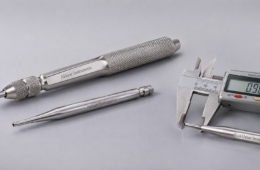
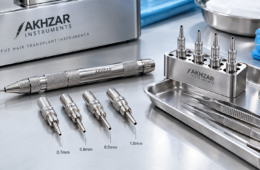
Punches are available in different sizes, including commonly used diameters such as 0.7 mm, 0.8 mm, 0.9 mm, and 1.0 mm. The appropriate size depends on factors such as follicular-unit characteristics, hair angle, skin properties, extraction technique, and the requirements of the procedure.
Using a punch that is too small may make extraction more difficult in some situations, while an unnecessarily large punch can increase tissue removal.
The goal is not simply to select the smallest available punch.
The goal is to use an instrument that provides an appropriate balance between accurate follicular-unit targeting and controlled extraction.
How Akhzar Instruments Can Help
Akhzar Instruments manufactures FUE punches in multiple diameters and configurations so clinics and professionals can select instruments according to their extraction requirements.
Available options can include:
- 0.7 mm FUE punches
- 0.8 mm FUE punches
- 0.9 mm FUE punches
- 1.0 mm FUE punches
- Sharp punch designs
- Serrated punch designs
- Manual FUE punch options
This variety allows the instrument specification to be matched more closely to the intended application instead of using one punch size for every extraction situation.
2. Punch Alignment Can Affect Graft Integrity
Another important factor is the angle and alignment of the punch during follicular-unit extraction.
Hair follicles do not always grow perpendicular to the surface of the skin. Their direction and angle can vary across different areas of the scalp.
If the punch does not follow the appropriate follicular direction, it may intersect the follicular unit rather than surrounding it.
This can contribute to:
- Follicle transection
- Partial graft cutting
- Difficult extraction
- Increased resistance
- Multiple extraction attempts
Even a well-manufactured FUE punch cannot compensate for incorrect positioning or technique.
Therefore, instrument quality and operator technique need to work together.
3. A Dull or Damaged Punch Can Increase Extraction Difficulty
The condition of the FUE punch should also be checked.
A punch that has become dull, damaged, contaminated, or otherwise unsuitable for use may not enter the tissue as expected.
Instead of creating a controlled scoring path, excessive pressure may be required.
This can make the extraction process less predictable.
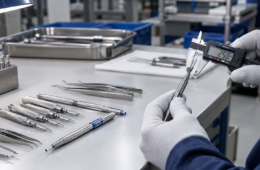
A professional should inspect instruments regularly and replace or service them according to the manufacturer’s recommendations and the clinic’s operating procedures.
Why Punch Quality Matters
A properly manufactured punch should provide consistent geometry and a suitable cutting edge for its intended application.
At Akhzar Instruments, FUE punches are manufactured with different specifications to support different extraction requirements. Clinics can discuss their requirements with Akhzar Instruments rather than simply selecting a generic punch specification.
This is particularly useful when a clinic experiences recurring problems with:
- Difficult scoring
- Inconsistent cutting
- Punch slipping
- Repeated extraction attempts
- Graft transection
The correct instrument specification can then be considered as part of the troubleshooting process.
4. Sharp and Serrated Punches May Behave Differently
Another consideration is the punch design.
Sharp and serrated FUE punches can behave differently during extraction. The choice between them should depend on the extraction method, tissue characteristics, operator preference, and the intended application.
A sharp punch is designed around a cutting edge, while a serrated configuration has a different interaction with tissue.
There is no universal punch design that is automatically appropriate for every patient or every extraction situation.
Akhzar Instruments: Different Punch Options for Different Requirements
Akhzar Instruments offers both sharp and serrated FUE punch options, allowing professionals to evaluate which configuration better suits their workflow.
For example, if a clinic is experiencing difficulty with a particular extraction method, it may be useful to compare punch configurations rather than changing only the punch diameter.
The important point is to treat the FUE punch as a technical instrument that should be selected according to the extraction requirement.
5. Excessive Force During Extraction Can Damage Grafts
If a graft does not come out easily, applying progressively greater force may not always be the best solution.
Excessive force can place mechanical stress on the follicular unit.
If the graft is still attached to surrounding tissue, forceful extraction can potentially contribute to graft stretching, crushing, or separation.
When resistance is encountered, the operator should consider whether the scoring depth, punch alignment, tissue characteristics, or extraction technique needs to be reassessed.
The solution is often not simply “pull harder.”
It may be necessary to identify why the graft is resisting removal.
6. Repeated Punching Can Increase the Risk of Damage
Another warning sign is when the operator repeatedly attempts to score the same follicular unit.
Multiple attempts can increase tissue manipulation around the graft.
If a punch is not entering cleanly, the operator may need to check:
- Punch condition
- Punch diameter
- Punch design
- Alignment
- Hand control
- Tissue characteristics
- Extraction method
A suitable FUE punch should support controlled scoring rather than requiring unnecessary repeated attempts.
This is one reason why instrument selection should be considered part of the overall extraction workflow.
7. Hair Characteristics Can Make Extraction More Difficult
Graft behavior can also vary depending on the patient’s hair and scalp characteristics.
Factors such as:
- Hair curl
- Hair angle
- Follicular-unit depth
- Skin characteristics
- Hair shaft thickness
- Follicle orientation
can affect extraction difficulty.
Curly or sharply angled follicles may require particularly careful alignment because the follicle direction beneath the skin may differ from what is visible on the surface.
This means the same FUE punch may perform differently across different extraction conditions.
The instrument should therefore be selected and used with the individual extraction situation in mind.
8. Graft Handling After Scoring Is Also Important
Graft damage does not necessarily happen only while the punch is entering the scalp.
Once a follicular unit has been extracted, it still needs to be handled carefully.
Forceps are commonly used during graft manipulation, and excessive compression or an inappropriate grip can damage delicate graft tissue.
If grafts appear intact immediately after scoring but become damaged during handling, the forceps and handling process should also be evaluated.
Akhzar Instruments Graft Forceps
Akhzar Instruments also manufactures graft and implant forceps for hair transplant applications.
When troubleshooting graft damage, it is useful to evaluate the complete instrument combination:
FUE Punch → Extraction → Graft Handling → Storage/Preparation
Improving only the punch may not solve a problem that is actually occurring during forceps handling.
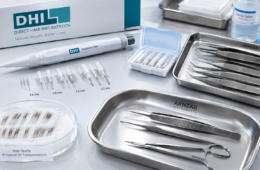
For clinics sourcing multiple hair transplant instruments, Akhzar Instruments can provide FUE punches, forceps, blades, implanter pens, and related instruments according to the required product specifications.
9. The Punch Should Be Appropriate for the Intended Application
A common mistake is selecting a punch only by price or diameter.
A professional buyer should also consider:
- Punch geometry
- Cutting edge
- Sharp or serrated configuration
- Diameter
- Material and manufacturing quality
- Consistency between instruments
- Compatibility with the intended extraction method
- Availability of required specifications
This is particularly important for clinics performing FUE regularly.
A small difference in instrument characteristics can affect how an instrument feels and behaves during the extraction workflow.
10. Instrument Consistency Matters for Clinics
For clinics that perform a high volume of procedures, consistency between instruments is particularly important.
If one punch performs differently from another supposedly identical punch, the operator may need to continuously adjust technique.
This is why clinics and distributors should communicate their exact requirements to the manufacturer.
Working With Akhzar Instruments
Akhzar Instruments works with hair transplant professionals and buyers looking for FUE punches and other hair transplant instruments.
Instead of treating every order as a generic product purchase, buyers can share their required:
- Punch diameter
- Sharp or serrated configuration
- Instrument type
- Quantity
- Application requirements
- Branding requirements
Akhzar Instruments can then prepare a quotation based on the requested specifications.
This approach can be particularly useful for clinics, distributors, and private-label buyers who require specific instrument configurations.
A Simple FUE Graft Damage Troubleshooting Checklist
If graft damage is occurring repeatedly, review the following points:
Before Extraction
- Is the punch diameter appropriate?
- Is the punch sharp and in suitable condition?
- Is the selected punch design appropriate?
- Is the instrument clean and properly maintained?
- Are the follicular units clearly identified?
During Scoring
- Is the punch correctly aligned with the follicular direction?
- Is excessive pressure being used?
- Is the operator repeatedly scoring the same graft?
- Is the punch cutting consistently?
- Is the instrument slipping?
During Extraction
- Is excessive force required?
- Is the graft adequately released?
- Is the graft being stretched or crushed?
- Is repeated manipulation necessary?
During Graft Handling
- Are forceps gripping the graft appropriately?
- Is excessive pressure being applied?
- Are grafts being handled unnecessarily?
- Is the extraction and handling workflow consistent?
This checklist can help identify whether the problem is related primarily to the instrument, technique, or graft-handling stage.
How to Choose an FUE Punch for Your Workflow
There is no single FUE punch specification that should be used for every patient and every extraction.
Instead, selection should consider the intended application.
For example, a clinic may evaluate:
Punch Diameter
Choose from available diameters according to the requirements of the follicular units and extraction technique.
Punch Design
Compare sharp and serrated options according to the operator’s workflow and preferences.
Instrument Quality
Look for consistent manufacturing and suitable cutting characteristics.
Application
Manual extraction and other extraction workflows may require different instrument specifications.
Supplier Support
A manufacturer that can discuss specifications can be more useful than a supplier offering only a fixed generic product.
Akhzar Instruments provides multiple FUE punch configurations and other hair transplant instruments, making it possible for buyers to communicate their specific requirements before ordering.
When Should You Consider Changing Your FUE Punch?
If the same graft-damage problem continues despite reviewing technique and handling, the instrument should be evaluated.
Consider reviewing the punch when you notice:
- Inconsistent cutting
- Frequent punch slipping
- Increased resistance
- Repeated scoring attempts
- Visible damage to the punch
- Increased graft transection
- Difficulty extracting otherwise suitable grafts
However, changing the punch alone should not be considered a guaranteed solution. Extraction technique, follicular orientation, patient-specific characteristics, and graft handling should also be reviewed.
Why Akhzar Instruments Can Be Considered for FUE Instrument Sourcing
Akhzar Instruments is a Sialkot, Pakistan-based manufacturer and exporter of surgical and hair transplant instruments.
For hair restoration professionals, its product range includes:
- FUE Punches
- Sapphire Blades
- Hair Transplant Slit Blades
- DHI & Choi Implanter Pens
- Implant Forceps
- Graft Forceps
- Scissors
- Other hair transplant accessories
The focus is not simply on supplying a random instrument from a fixed catalog.
Buyers can send their required product list or specifications, and Akhzar Instruments can prepare a custom quotation based on those requirements.
This can be useful for:
- Hair transplant clinics
- Surgeons
- Medical distributors
- Instrument wholesalers
- OEM buyers
- Private-label brands
For buyers who need specific FUE punch diameters or configurations, discussing the application before ordering can help narrow down the appropriate product specification.
Final Thoughts
FUE graft damage can have multiple causes, and identifying the actual problem is the first step toward improving the extraction workflow.
Punch diameter, punch design, instrument condition, alignment, extraction force, follicular orientation, and graft handling can all influence the integrity of extracted grafts.
A good troubleshooting process should therefore examine the entire workflow rather than focusing on one instrument alone.
The right FUE punch can support controlled extraction, but it needs to be combined with appropriate technique and careful graft handling.
If you are looking for FUE punches, graft forceps, hair transplant blades, implanter pens, or other hair transplant instruments, Akhzar Instruments can work from your required specifications and prepare a quotation for your needs.
Send Akhzar Instruments your product requirements or product list to discuss the available instrument options and request a custom quote.
Frequently Asked Questions
Can an FUE punch cause graft damage?
Yes, an unsuitable, damaged, dull, or incorrectly used punch can contribute to graft damage. However, graft damage can also result from alignment, extraction technique, follicular orientation, or graft handling.
What FUE punch sizes are available?
FUE punches are available in different diameters. Akhzar Instruments offers options including 0.7 mm, 0.8 mm, 0.9 mm, and 1.0 mm, depending on the required configuration.
Are sharp and serrated FUE punches different?
Yes. Sharp and serrated punches have different edge designs and may behave differently during extraction. The appropriate option depends on the intended application and operator preference.
Can a dull punch increase graft damage?
A damaged or unsuitable punch can make controlled scoring more difficult and may increase the need for pressure or repeated attempts. Instruments should be inspected and maintained according to appropriate clinical procedures.
Does a larger FUE punch always reduce graft damage?
No. Punch diameter should be selected according to the extraction requirement. A larger punch is not automatically better, and unnecessarily large instrumentation can remove more surrounding tissue.
Does graft damage only happen during punching?
No. Damage can occur during scoring, extraction, forceps handling, and other stages of graft processing. The complete workflow should be reviewed when repeated damage is observed.
Can Akhzar Instruments supply custom FUE punch requirements?
Akhzar Instruments can discuss specific requirements such as punch diameter, design, quantity, and intended application and prepare a quotation based on the buyer’s requirements.
Who can order hair transplant instruments from Akhzar Instruments?
Akhzar Instruments works with hair transplant clinics, surgeons, distributors, wholesalers, OEM buyers, and private-label customers.
About Akhzar Instruments
Akhzar Instruments is a manufacturer and exporter of hair transplant, surgical, and dental instruments from Sialkot, Pakistan.
For FUE and DHI procedures, the company supplies instruments including FUE punches, hair transplant blades, sapphire blades, implanter pens, graft forceps, implant forceps, scissors, and related accessories.
For product specifications, OEM/private-label requirements, or a custom quotation, buyers can send their requirements or product list to Akhzar Instruments.
Website: https://akhzarinstruments.com