
If you are seeing a higher-than-expected rate of FUE punch transection, changing the punch size is not always the first thing to do.
Graft damage during FUE can be influenced by several factors, including punch diameter, punch design, follicular direction, insertion angle, depth, instrument condition and extraction technique. A punch that works well in one situation may not perform the same way when the follicular units, donor area or extraction requirements change.
This guide looks at seven practical factors to check when FUE grafts are being damaged during extraction.
What Is FUE Punch Transection?
During follicular unit excision (FUE), a hollow punch is used to separate a follicular unit from the surrounding tissue before the graft is removed.
FUE punch transection occurs when the punch cuts into or through part of the follicular unit during this process.
The difficulty is that the follicle is not always positioned in exactly the same direction as the hair visible above the skin. Follicular direction can change beneath the surface, so the punch needs to be aligned with the individual follicular unit rather than simply following the visible hair shaft.
For a technical overview of FUE extraction and punch instrumentation, see the medical literature from the [NCBI/PMC review on follicular extraction].
When transection becomes a recurring problem, look at the complete extraction setup rather than assuming that the punch diameter is the only cause.
1. Check the FUE Punch Diameter
Punch diameter is one of the first factors to review when investigating graft transection.
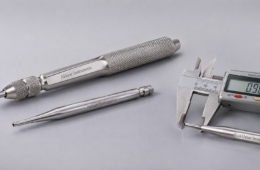
FUE punches are available in different diameters. Published literature describes punch sizes broadly from about 0.7 mm to 1.2 mm, with commonly used sizes varying according to the harvesting situation and donor area.
A smaller punch can create a smaller extraction opening, but it may provide less clearance around a larger or more challenging follicular unit. A larger punch can provide more clearance, but it also removes more surrounding tissue.
That creates a practical trade-off.
So instead of asking:
“Which FUE punch size is best?”
a more useful question is:
“Which punch diameter fits the follicular units and extraction technique being used?”
This is why clinics may need access to multiple [FUE punch sizes and configurations] rather than using one diameter for every case.
2. Look at the Punch Design
Two punches with the same diameter do not necessarily have the same design.
The cutting edge, inner and outer geometry, wall configuration and overall punch profile can influence how the instrument interacts with the tissue.
Research on different FUE punch designs has explored ways of reducing follicular injury and transection. Different designs have been developed to change how the punch cuts the skin and separates the follicular unit from surrounding tissue.
When comparing an FUE punch, consider more than the number printed on the instrument.
Check:
- Diameter
- Cutting-edge design
- Sharp or serrated configuration
- Punch geometry
- Overall construction
- Manual or motorized compatibility
- Compatibility with the existing handle or system
A punch should be considered as part of the complete extraction system, not as an isolated component.
3. Check Punch Alignment and Insertion Angle
This is one of the easiest factors to overlook.
The visible hair shaft does not always show the exact direction of the follicle underneath the skin. Follicular units can curve or change direction as they travel through the tissue.
If the punch is inserted without accounting for that direction, the cutting edge can move toward the follicular unit instead of around it.
That can increase the risk of damaging the graft.
If you are investigating FUE punch transection, review:
Alignment → insertion angle → depth → extraction movement.
Changing the punch alone may not address the underlying issue.
4. Review Punch Depth
Punch depth is another important part of the extraction process.
If the punch does not adequately separate the follicular unit, removing the graft can become more difficult. Excessive penetration, on the other hand, can increase the risk of injury to structures beneath the intended dissection level.
Published FUE literature discusses punch length and depth as factors that can influence transection and other extraction-related injuries.
If the same instrument produces different results in different donor areas, consider whether the follicular characteristics and required depth have changed.
This is also why punch selection should not be separated from the surgeon’s established extraction technique.
5. Inspect the Cutting Edge
Sometimes the problem is simpler: the instrument may no longer be performing as it did when it was new.
Inspect the punch for:
- Dullness
- Edge damage
- Deformation
- Surface damage
- Residue or contamination
- Changes in cutting performance
A damaged or worn edge can alter how the punch enters the tissue.
If a previously reliable punch suddenly starts producing more difficult extractions or damaged grafts, compare it with a new or known-good instrument.
This simple comparison can help determine whether the problem is related to the instrument rather than the punch size itself.
6. Don’t Blame Every Transection Problem on Punch Size
It is easy to conclude:
“The punch is too small.”
But graft transection can have more than one contributing factor.
Possible factors include:
- Punch diameter
- Punch design
- Follicular curvature
- Hair calibre
- Follicular-unit size
- Punch alignment
- Insertion angle
- Penetration depth
- Instrument condition
- Extraction technique
A review of FUE instrumentation discusses punch size, sharpness, design, force, orientation and insertion direction in relation to follicular injury.
That is why troubleshooting should start with the whole extraction process.
7. Keep More Than One FUE Punch Option Available
If a clinic uses exactly one punch size for every extraction situation, it may be worth reviewing whether that setup gives enough flexibility.
Different follicular units and donor areas can present different extraction requirements.
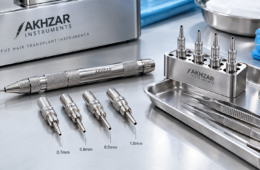
For example, a clinic may keep several punch diameters available, such as:
- 0.7 mm
- 0.8 mm
- 0.9 mm
- 1.0 mm
These sizes should not be treated as universal recommendations for every patient. The appropriate selection depends on the surgeon’s technique, the characteristics of the follicular units and the specific extraction requirements.
The goal is not simply to use a larger or smaller punch.
The goal is to have the right instrument options available for the workflow.
FUE Punch Transection Troubleshooting Checklist
Before replacing your complete instrument setup, check these points:
Punch
- Is the diameter appropriate for the graft characteristics?
- Is the cutting edge in good condition?
- Is the punch design suitable for the workflow?
- Is it compatible with the existing handle or motorized system?
Extraction
- Is the punch aligned with the follicular unit?
- Is the insertion angle appropriate?
- Is the penetration depth controlled?
- Is unnecessary force being applied?
Graft characteristics
- Are the follicles particularly curved?
- Are the follicular units larger or more complex?
- Does the problem occur in one donor area or across different areas?
Instrument comparison
- Does a new punch perform differently?
- Does the problem occur with one diameter or several?
- Does the same issue occur with different operators?
This approach can help determine whether the problem is primarily related to instrument selection, instrument condition, anatomy or technique.
How Akhzar Instruments Can Help With FUE Punch Selection
At Akhzar Instruments, we manufacture and export hair transplant instruments]for clinics, doctors and professional buyers.
Our FUE punch options can include:
- 0.7 mm
- 0.8 mm
- 0.9 mm
- 1.0 mm
- Sharp configurations
- Serrated configurations
- Manual punch options
- Other configurations based on customer requirements
You can view our current [FUE punches and other hair transplant instruments] to see the available instrument range.
The important point is that Akhzar Instruments does not need you to select from a generic one-size-fits-all approach.
If your clinic already knows the required diameter, punch type, quantity or instrument specification, you can send those requirements to us.
We can review the requirement, check the available option and prepare a custom quotation.
Need a Specific FUE Punch?
Send us:
Required size + punch type + quantity + existing specification
and our team can review the requirement.
If you have a specific instrument requirement, you can contact Akhzar Instruments directly with your product specifications.
Akhzar Instruments
Sialkot, Pakistan
Hair Transplant & Surgical Instruments Manufacturer & Exporter
OEM / Private Label Available
Frequently Asked Questions
What causes FUE punch transection?
FUE punch transection can be associated with punch diameter, punch design, follicular direction, insertion angle, depth, instrument condition and extraction technique. The actual cause needs to be evaluated within the specific extraction workflow.
Does a smaller FUE punch always reduce graft damage?
No. A smaller punch may create a smaller extraction opening, but it can provide less clearance around some follicular units. Larger punches can reduce transection in some situations while creating a larger extraction wound.
What FUE punch sizes are available?
FUE punches are manufactured in multiple diameters. Akhzar Instruments offers options including 0.7 mm, 0.8 mm, 0.9 mm and 1.0 mm, depending on the required configuration.
Should every FUE procedure use the same punch size?
Not necessarily. Punch selection can depend on the follicular-unit characteristics, hair calibre, follicular direction, donor area and the surgeon’s established technique.
Can changing the FUE punch eliminate transection?
Changing the punch may address an instrument-related problem, but it cannot guarantee elimination of transection. Punch design, size, alignment, depth, follicular anatomy and extraction technique all need to be considered.
Final Takeaway
When FUE punch transection becomes a recurring problem, don’t automatically change the punch diameter and assume the problem is solved.
Start with the complete picture:
Punch size → punch design → edge condition → alignment → depth → follicular characteristics → extraction technique.
The right instrument is one part of the extraction process. Having suitable punch sizes and configurations available gives clinics more flexibility when selecting instruments for their established workflow.
If you need a specific FUE punch size or configuration, Akhzar Instruments can review your requirements and provide available options with a custom quotation.
1 Comment
FUE Punch Not Cutting Cleanly? Causes & Solutions
[…] FUE punches can have the same diameter but behave […]